Spinning Gold: How the Vertical Spit Became Fine Dining's Most Unexpected Star
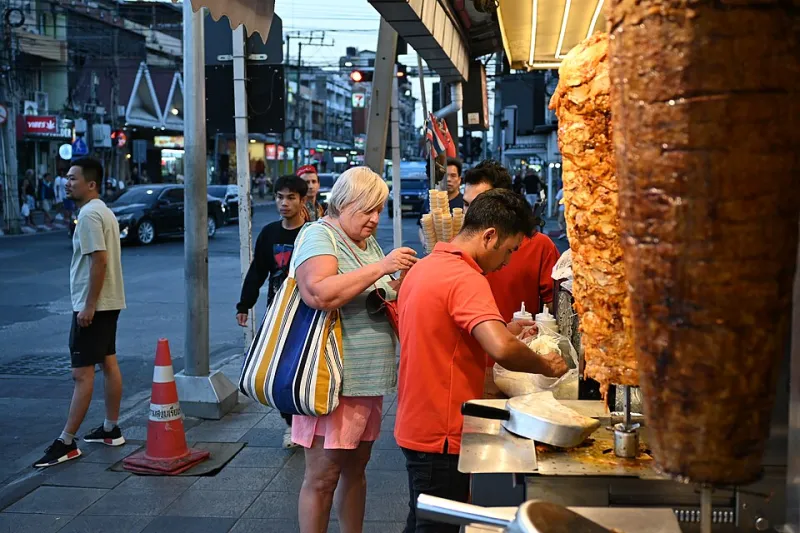
Photo: PattayaPatrol, CC BY-SA 4.0, via Wikimedia Commons
There's a moment, somewhere between the third and fourth hour of a properly stacked vertical spit doing its slow rotation, when something almost magical happens. The outer layer of meat crisps into a dark, caramelized crust. Fat from higher up on the stack bastes everything below it. The whole column breathes with heat in a way that no flat grill, no oven, and no sous vide bath can replicate. Turkish pitmasters have understood this for centuries. Now, a growing wave of American fine dining chefs is finally catching on.
And when we say fine dining, we're not talking about a kebab wrap served on nicer plates. We're talking white tablecloths, tasting menus, and the kind of kitchens where the chef's name is on the door and the reservation waitlist stretches three months out.
The Physics of the Vertical Spit (And Why It's So Hard to Master)
Before we get into who's doing this and where, it's worth understanding what makes vertical spit cooking — the method behind traditional doner kebab — so technically demanding and, ultimately, so rewarding.
When meat is cooked on a conventional horizontal grill or in an oven, heat is applied from one or two directions. Juices run off and drip away. The cook has to flip, rotate, and monitor constantly. With a vertical rotisserie, everything changes. Gravity becomes a cooking tool. As the stacked layers of seasoned meat spin against a heat source — traditionally charcoal, though modern setups often use infrared burners — fat naturally migrates downward, self-basting the column from top to bottom in a continuous cycle.
The result is a layered complexity of texture that's nearly impossible to fake. The outer surface develops a crackling sear. Just beneath it, the meat stays tender and juicy. Deeper still, the interior layers absorb the rendered fat and spice from everything above. Every slice you shave off reveals a different stage of the cook — which is exactly why trained chefs are losing their minds over it.
But here's the catch: doing this well takes serious skill. Stack the meat too loosely and you lose structural integrity. Compress it too tightly and the interior never properly renders. The seasoning has to penetrate every layer uniformly, which means the prep work — often done 24 to 48 hours in advance — is just as important as the cook itself.
From Street Corner to Starred Kitchen
For a long time, vertical spit setups were associated almost exclusively with fast-casual spots and food carts in the U.S. That's not a knock — some of the best food in this country comes off a street corner. But it did create a perception problem. The equipment looked informal. The format felt quick-service. Fine dining chefs largely ignored it.
That started shifting around 2018 and 2019, when a handful of chefs began experimenting with what they were calling "live fire" menus. Wood-fired ovens had already had their moment. Open-hearth cooking was everywhere. The vertical spit was the logical next frontier — a live fire technique with a completely different cooking geometry and a flavor profile that couldn't be replicated any other way.
Chefs who'd traveled through Istanbul, Gaziantep, or Ankara came back with a different understanding of what the method could do. They'd eaten doner that bore no resemblance to what they'd grown up associating with the word. They'd seen whole lambs and hand-seasoned beef blends cooked with precision and care. They came home wanting to apply that same seriousness to their own menus.
The Ingredient Upgrade
One of the biggest ways fine dining kitchens are distinguishing their vertical spit programs is through sourcing. Traditional doner kebab is already delicious when made with quality ground lamb or beef. But when you start stacking heritage-breed pork shoulder from a small farm in Vermont, or dry-aged wagyu layered with house-made tallow and a spice blend built around Urfa biber and smoked paprika, you're entering a different conversation entirely.
Several chefs experimenting in this space have also started playing with non-traditional proteins. Duck breast stacked with rendered duck fat and seasoned with sumac and black cumin. Goat with a yogurt-and-garlic marinade that chars beautifully on the outer edges. Even whole fish, though that requires a significantly modified approach to the stacking and rotation speed.
The common thread is that the vertical spit rewards fat content and marination time. The more a chef leans into those two factors, the more the technique gives back.
What This Means for the Broader Kebab Conversation
Here at Taki's, we think about Turkish food every single day — and watching this shift happen in the fine dining world is genuinely exciting. Not because it validates what we've always known (though it does), but because it broadens the conversation about what Turkish culinary tradition can be in an American context.
When a Michelin-starred chef in New York or Chicago or Los Angeles puts a vertical spit in their kitchen and builds a tasting menu course around it, it sends a signal to curious diners everywhere. It says: this technique deserves your full attention. This cuisine has depth worth exploring.
That curiosity tends to flow in both directions. Diners who encounter vertical spit cooking in a fine dining context often get curious about the tradition behind it. They start seeking out authentic Turkish restaurants. They want to understand where the method came from, what the spices mean, why the lamb tastes the way it does. It's a rising tide situation.
The Technical Barrier Is Also the Point
There's a reason not every restaurant has jumped on this trend despite the obvious flavor payoff: it's genuinely hard. The equipment is expensive and requires dedicated space. The learning curve is steep — most culinary schools don't teach vertical spit technique, which means chefs are either traveling abroad to learn it firsthand or finding mentors within Turkish culinary communities here in the States.
That difficulty is actually part of what makes it compelling to serious chefs. The fine dining world is always looking for techniques that can't be shortcut, flavors that can't be faked, processes that reward mastery over convenience. Vertical spit grilling checks every one of those boxes.
For the chefs willing to put in the work, the results speak for themselves: a cooking method with centuries of refinement behind it, capable of producing flavors that stop people mid-bite and make them ask, genuinely curious, what is that?
The answer, of course, starts with a spinning column of beautifully seasoned meat and a heat source that's been doing its job since long before any of us showed up to complicate things.
Curious about the Turkish techniques behind your favorite kebab dishes? Come visit us at Taki's Kebab House — we'd love to show you what authentic vertical spit cooking tastes like up close.