Spice by Spice: How Turkey's Regional Flavors Found a Home at Taki's
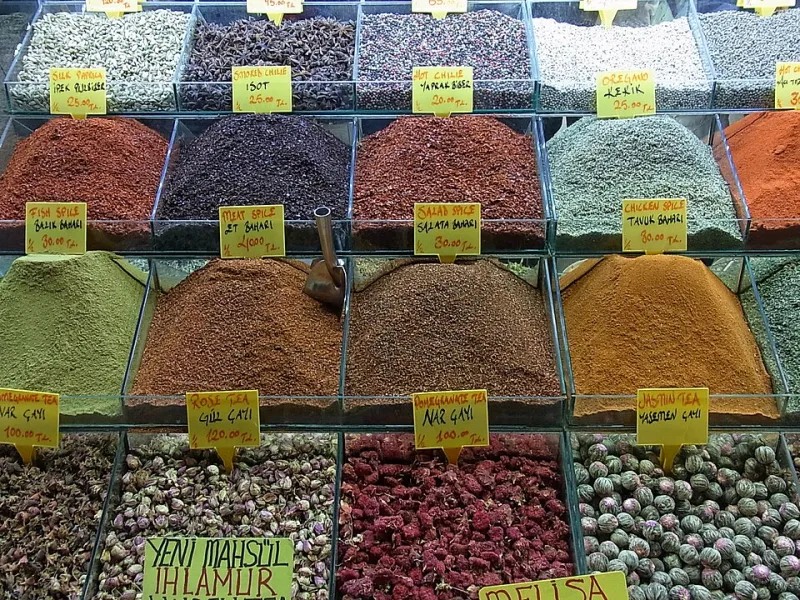
Photo: Tomohisa Hashimoto, CC BY-SA 2.0, via Wikimedia Commons
Ask most Americans what makes a great kebab, and you'll hear some version of the same answer: good meat, a hot grill, maybe a little garlic. That's not wrong, exactly. But it's a bit like saying a great pizza just needs dough and cheese. The real story is in the details — and at Taki's Kebab House, those details start with a wooden spice cabinet that smells like a different country entirely.
Turkey isn't a single culinary tradition. It's a country roughly the size of Texas that stretches across two continents, borders eight nations, and contains microclimates capable of producing everything from dried chilies to wild thyme to black cumin. Each of those regions developed its own way of seasoning meat over centuries, and those differences didn't disappear when kebab went global. They just got harder to find.
At Taki's, finding them is kind of the whole point.
Why Where You're From Changes Everything
The easiest way to understand Turkish regional flavor is to compare two cities that couldn't be more different in their approach to kebab: Istanbul and Adana.
Istanbul, Turkey's cultural and commercial capital, has always been a crossroads. Its kebab tradition reflects that — layers of flavor built from restrained spicing, fresh herbs, and a certain culinary diplomacy that comes from centuries of feeding people from every corner of the Ottoman Empire. You'll find subtle use of allspice, a whisper of cinnamon, fresh parsley doing real work rather than just sitting as a garnish.
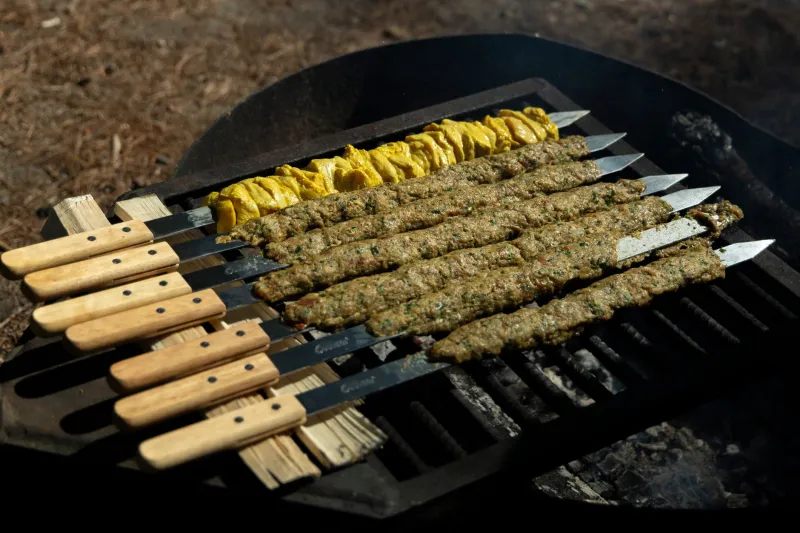
Adana is something else entirely. Named for the city in the hot, flat agricultural heartland of southern Turkey, Adana kebab is an exercise in controlled intensity. The key ingredient is isot biber, also called Urfa pepper — a dark, oily, slow-burning chili that delivers heat without the sharp sting you'd get from cayenne. Adana-style spice blends are built around that pepper, mixed with cumin and a generous hand of fat from lamb tail. The result is a kebab that doesn't just taste different from an Istanbul preparation — it feels different in your mouth, warming from the back of the throat rather than hitting you upfront.
Then there's the Aegean coast, where the influence of Greek and Mediterranean cooking softens the profile further — oregano, lemon zest, olive oil marinades — and the Black Sea region, where hazelnuts and mild, grassy herbs create something almost delicate by comparison.
Inside Taki's Spice Process
So how does a neighborhood kebab spot in the US capture any of that authenticity? The honest answer is: it takes work that most places aren't willing to do.
At Taki's, the spice sourcing conversation starts before a single blend is mixed. Some ingredients come from specialty importers who work directly with Turkish producers — isot pepper from Şanlıurfa, sumac from the Mediterranean coast, dried mint that actually tastes like mint rather than the faded green dust you find in most grocery store jars. A few items are sourced domestically when the quality is genuinely comparable, but the benchmark is always the Turkish original.
The blending itself happens in small batches. That's not a marketing phrase — it's a practical reality. Whole spices lose volatile oils quickly once ground, which means a blend made in a 50-pound batch and sitting in storage for six weeks is a fundamentally different product than one ground fresh every few days. At Taki's, the goal is always the latter. The difference shows up in the food in ways that are hard to articulate but easy to taste.
What's actually in each blend? That's where it gets proprietary. But the general architecture follows regional logic: southeastern-inspired preparations lean on isot and cumin with a fat-forward approach; Aegean-style dishes get brighter, more acidic profiles; and anything Istanbul-adjacent gets that layered, slightly sweet complexity that comes from allspice and careful restraint.
How to Read a Menu Like a Geography Lesson
For American diners, understanding regional variation isn't just an academic exercise — it's a practical tool for ordering better. Here's a quick cheat sheet:
Adana kebab on any menu should signal heat and richness. If you're used to ordering mild, consider starting here anyway — the heat is slow and satisfying rather than aggressive.
Şiş kebab (the skewered cubed meat style) varies wildly by region. At a place like Taki's that specifies its inspiration, look for notes in the menu description about marinating time and herb use — those are clues about the regional tradition being honored.
Urfa kebab is the milder, earthier cousin of Adana. Same isot pepper base, but dialed back in heat and pushed further into deep, almost smoky-sweet territory. A great entry point for diners curious about southeastern Turkish flavors without the full heat commitment.
Beyti kebab, more of an Istanbul creation, wraps spiced ground meat in flatbread and serves it with yogurt and tomato sauce. It's a good benchmark for that restrained, multi-layered capital city style.
Why Authenticity Is a Moving Target
Here's something worth saying plainly: even in Turkey, "authentic" regional kebab is in constant negotiation. Cooks move, spice availability shifts, and customer preferences evolve. A family that moved from Adana to Istanbul two generations ago might make their kebab with slightly less isot than their grandparents did. That's not inauthentic — that's how food actually works.
What Taki's is chasing isn't a museum recreation of any single regional tradition. It's something more honest than that: a genuine engagement with where each dish comes from, why it tastes the way it does, and what it means to bring that flavor to a neighborhood in the US where most diners have never thought much about the difference between a kebab from the Aegean coast and one from the Syrian border.
That engagement shows up in the spice cabinet. It shows up in the sourcing conversations and the small-batch grinding and the decision to put Adana on the menu even though it requires explaining to about half the tables what isot pepper actually is.
The Best Reason to Ask Questions
If you're at Taki's and you're curious, ask. The staff can tell you which dishes skew southeastern versus coastal, which preparations use the most complex spice layering, and which is the right choice if you want to understand what all the fuss about Adana is actually about.
Turkish food has a long tradition of hospitality that includes genuine enthusiasm for sharing the story behind the meal. At Taki's, that tradition travels well. The spice cabinet is the starting point — but the conversation it opens up is the real thing worth having.