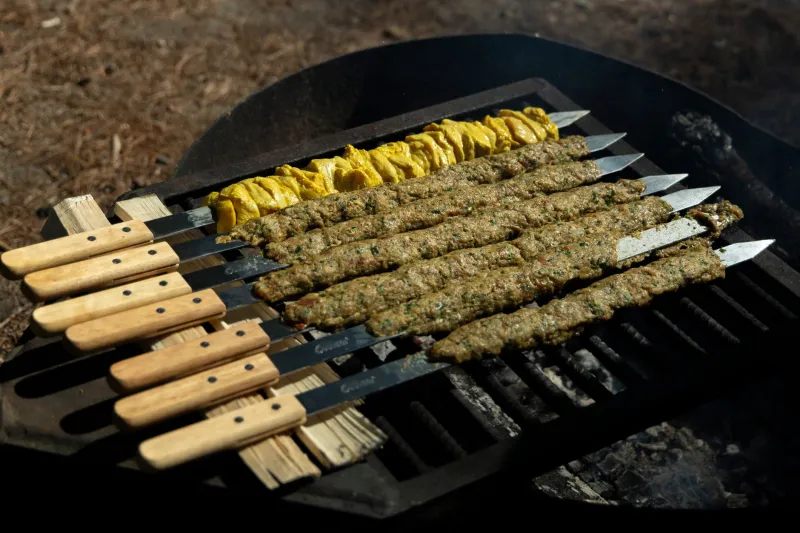
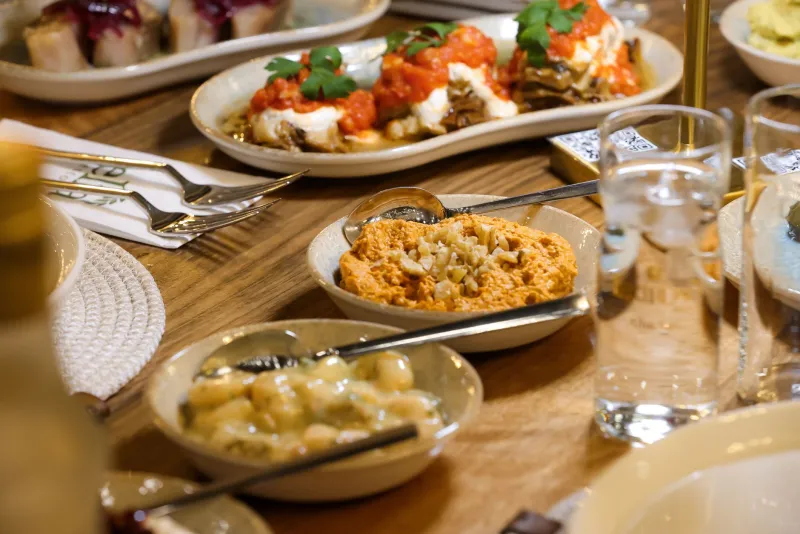
Ask for These Dishes and Watch the Kitchen Come Alive: The Unwritten Turkish Menu Most Americans Never Find
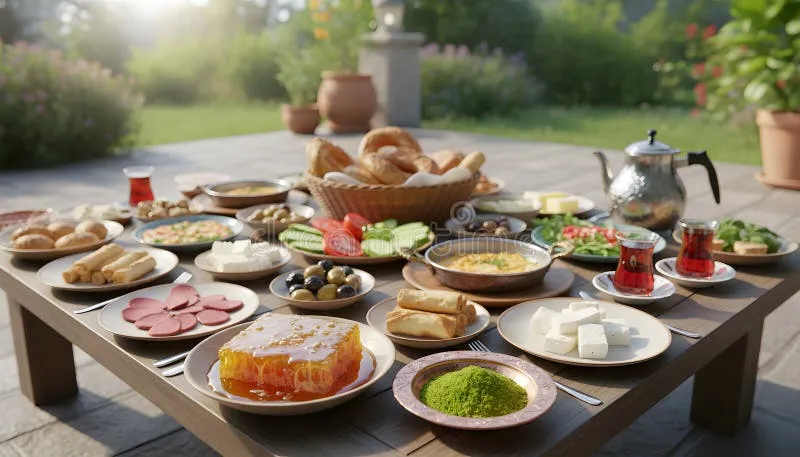
Photo: authentic Turkish mezze spread with traditional dishes on wooden table, via thumbs.dreamstime.com
There's a moment that happens in almost every authentic Turkish kebab house. A family walks in—grandma, a couple of kids, someone's uncle who's been in the country for thirty years—and they don't even pick up a menu. They lean over the counter and start talking to whoever's working. A few words in Turkish, maybe a nod toward the back kitchen, and something gets set in motion that the table next to them has absolutely no idea about.
What they're ordering isn't secret in any dramatic sense. It's not locked in a vault. It's just... not on the laminated menu hanging above the register. And for most American diners, if it's not on the menu, it doesn't exist.
At Taki's Kebab House, that gap between what's printed and what's possible is something we think about a lot. So we asked around—talked to owners, line cooks, and regulars who've been eating Turkish food their whole lives—and put together a guide to the dishes that never quite made it onto the standard American kebab menu, and exactly how you can ask for them.
Why the Gap Exists in the First Place
It's not that Turkish restaurant owners are hiding the good stuff. It's more about translation—not just language, but cultural translation. When a Turkish kebab spot opens in the U.S., the menu gets built around what American customers recognize and feel comfortable ordering. Doner wraps. Chicken skewers. Maybe a lamb chop plate. These are the dishes that move, and a restaurant has to move dishes to stay open.
But the kitchen staff? They grew up eating differently. Regional specialties from Gaziantep, Adana, or the Aegean coast don't always have clean English equivalents, and they often require ingredients that take extra effort to source. So they stay off the printed menu—but they don't disappear. They live in the kitchen, waiting for someone who knows to ask.
Çiğ Köfte: The Cold Preparation Most People Skip Right Past
Before you get excited, let's clarify: the version you'll find at most Turkish spots in the U.S. is the vegetarian, ready-made variety—bulgur wheat kneaded with tomato paste, spices, and pomegranate molasses, served cold and wrapped in lettuce leaves. It's tangy, a little spicy, and nothing like what you're expecting if you've only ever eaten hot food at a kebab house.
Turkish families eat çiğ köfte as a snack or appetizer constantly. It doesn't require cooking, which is partly why it flies under the radar in a place that's centered on the grill. But ask for it at the right spot and you'll get a plate that's genuinely refreshing—especially alongside something heavy like an Adana kebab.
Lahmacun: The Dish That Deserves Its Own Reputation
Lahmacun gets described as "Turkish pizza" so often that it's almost become a joke among people who actually love it. It's not pizza. It's a paper-thin flatbread topped with a finely minced mixture of lamb, tomatoes, onions, and herbs, baked at high heat until the edges crisp up and the center stays just tender enough to roll.
You eat it with a squeeze of lemon and fresh parsley rolled inside like a wrap. It's fast, it's cheap, and in Turkey it's street food royalty. In the U.S., it sometimes doesn't make the menu because Americans aren't sure what to make of something so thin and so simple. But Turkish families order it constantly—often as a starter before the main kebab plates arrive.
If you see it on the menu, order it. If you don't, ask. A kitchen that's making its own bread is almost certainly capable of making lahmacun.
Beyran: The Breakfast Soup That Changes Everything
This one is regional—it comes from Gaziantep, a city in southeastern Turkey that's basically the culinary capital of the country. Beyran is a lamb and rice soup built on a deeply flavored bone broth, spiced with red pepper and served with a drizzle of clarified butter on top. In Gaziantep, people eat it for breakfast. Yes, breakfast.
It's not a dish you'll find on many American Turkish menus because the broth requires time and the dish doesn't fit neatly into the kebab house format. But owners and cooks from that region know exactly what it is, and if you ask—especially on a slow morning or early afternoon—you might just find yourself with a bowl that completely reframes what you thought Turkish food could be.
The Off-Menu Kebab Preparations Worth Asking About
Here's where things get interesting. The kebab itself has regional variations that almost never make it onto American menus.
Oruk is a stuffed bulgur and meat preparation from southeastern Turkey—kind of like a kebab that's been wrapped in a shell of bulgur wheat before being cooked. It's labor-intensive and doesn't scale easily, which is why it rarely appears on a printed menu. But in families from that region, it's comfort food at its most essential.
Testi kebabı—the clay pot kebab—is another one. Meat and vegetables sealed inside a terracotta pot and slow-cooked, then dramatically cracked open at the table. Some Turkish restaurants in major U.S. cities offer it with advance notice. It's the kind of preparation that makes you understand why kebab has been around for centuries.
İçli köfte is a fried or boiled bulgur shell filled with spiced ground lamb and pine nuts. It shows up at family gatherings and holidays constantly. At a restaurant, it's occasionally available as a special but rarely listed permanently.
How to Actually Ask for This Stuff
The honest answer is: just ask. Not in a demanding way, but genuinely. Tell the person at the counter that you've been eating Turkish food for years, or that a Turkish friend told you about a particular dish, or simply that you're curious whether the kitchen makes anything beyond the printed menu.
A good kebab house—the kind staffed by people who actually care about the food—will respond to genuine curiosity. They might not always have what you're looking for that day. Some preparations require advance notice or specific ingredients that aren't always stocked. But the conversation itself usually goes somewhere good.
At Taki's, we love when someone comes in and asks about regional dishes or family-style preparations. It's the kind of question that reminds everyone in the kitchen why they're doing this in the first place.
The Real Secret Isn't a Dish
After talking to enough kebab house owners and regulars, the pattern becomes clear: the "secret menu" isn't really about specific dishes. It's about relationship. Turkish food culture is built around hospitality—the idea that feeding someone well is a form of respect. When a Turkish family walks into a restaurant and starts negotiating what's for dinner, they're not being demanding. They're participating in a food culture that's fundamentally conversational.
The more you engage with that culture—ask questions, express genuine interest, come back more than once—the more the kitchen opens up. That's true at Taki's, and it's true at Turkish spots all over the country.
So next time you walk in and the menu feels familiar, look up and ask what the family in the corner is eating. That's usually where you want to start.