More Than a Meal: How Turkish Kebab Spots Are Becoming the Heart of American Communities

Photo: Metropolitan Transportation Authority of the State of New York, CC BY 2.0, via Wikimedia Commons
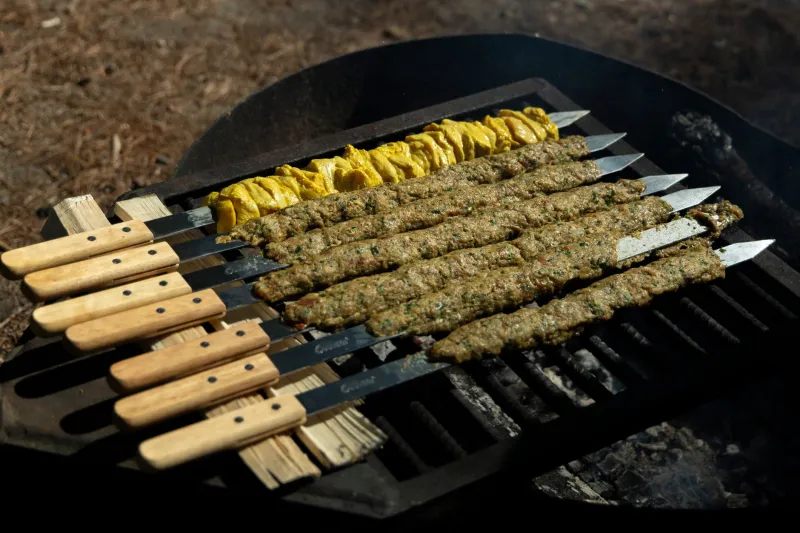
Walk past a Turkish kebab restaurant on a Friday evening and you'll notice something that goes way beyond the smell of charcoal-kissed meat drifting out onto the sidewalk. You'll see neighbors leaning across tables, office workers finally unwinding after a long week, and families celebrating birthdays in the warm glow of string lights. You'll see a community happening in real time.
That's not an accident. And it's not unique to one city or one zip code.
All over the United States — from strip malls in suburban Ohio to reclaimed storefronts in Brooklyn — Turkish kebab restaurants are doing something quietly remarkable. They're becoming neighborhood institutions. Gathering places. Economic engines. Cultural bridges. And they're doing it one plate of Adana at a time.
Filling Empty Storefronts With Something Real
In the years following the pandemic, a lot of American downtowns were left looking like ghost towns. Retail closures gutted main streets, and landlords were desperate for tenants who could actually draw foot traffic. Enter the Turkish restaurant.
Restaurateurs like Mehmet Yilmaz, who opened a kebab spot in a formerly vacant corner unit in Raleigh, North Carolina, describe the decision as equal parts passion and practicality. "I wanted to bring something from home, something real," he says. "But I also saw an opportunity. People were hungry — not just for food, but for somewhere to actually go."
That sentiment echoes across the country. Turkish restaurants, with their emphasis on communal dining, generous portions, and warm hospitality, have a natural advantage when it comes to creating the kind of atmosphere that keeps people coming back. And when people keep coming back, the whole block benefits.
Neighborhood business associations in cities like Columbus, Denver, and Nashville have noted that anchor food tenants — especially those with a strong cultural identity — tend to draw secondary foot traffic to surrounding businesses. A Turkish kebab house that fills up on a Tuesday night is also sending customers to the wine shop next door and the bookstore down the street.
A Table Where Everyone Belongs
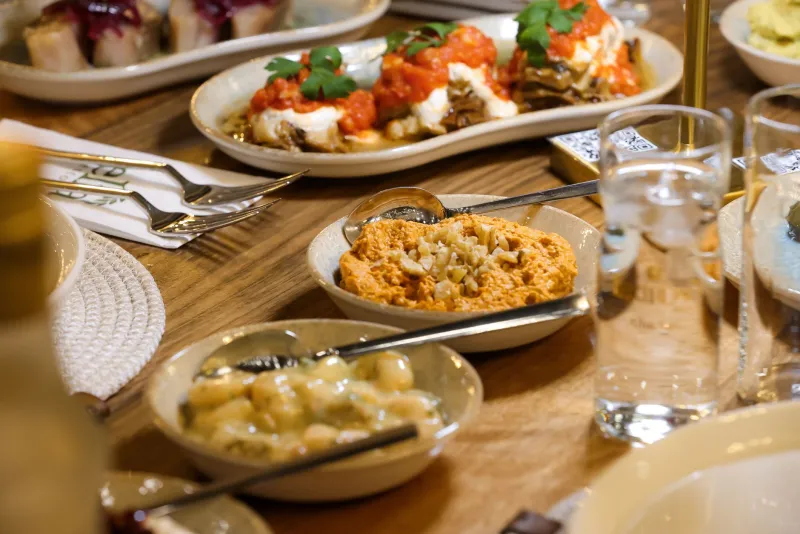
One of the less-talked-about superpowers of Turkish cuisine is its accessibility. There's something on the menu for almost everyone — grilled meats for the carnivores, vegetable mezze and lentil dishes for those eating plant-forward, and bread-heavy spreads that feel universally comforting regardless of where you grew up.
That broad appeal makes Turkish restaurants unusually effective at becoming cross-cultural spaces.
"We get everyone in here," says Taki, the owner of a kebab house that's become a fixture in its mixed-income neighborhood. "Construction workers, professors, families who just moved here from another country, kids who grew up three blocks away. They're all sitting next to each other, and half the time they end up talking."
Community leaders have noticed. In several cities, Turkish restaurant owners have been tapped to participate in local cultural festivals, neighborhood planning committees, and even school outreach programs focused on food education. The restaurant stops being just a restaurant. It becomes a kind of informal embassy — a place where Turkish culture gets introduced, explained, and celebrated without any of the stiffness of a formal cultural event.
Jobs, Mentorship, and Local Investment
Beyond the social fabric, the economic impact of these establishments is concrete and measurable. A single mid-sized Turkish restaurant might employ anywhere from eight to twenty-five people — cooks, servers, dishwashers, delivery drivers — many of whom are drawn from the surrounding neighborhood.
But the contribution often goes deeper than a paycheck. Many Turkish restaurant owners come from cultures where mentorship and apprenticeship are baked into the way business works. It's not unusual to find a line cook who started as a busboy and was trained personally by the head chef, or a manager who's being groomed to eventually open their own place.
"I learned everything here," says Marcus, a sous chef at a Turkish kebab restaurant in Atlanta who grew up nearby. "Not just how to cook — how to run a kitchen, how to talk to suppliers, how to handle a dinner rush. That's not something you get everywhere."
For neighborhoods that have historically struggled with unemployment or underinvestment, that kind of on-the-job education can have a ripple effect that outlasts any single business.
The Regulars Who Make It Work
Ask any Turkish restaurant owner what they're most proud of, and many of them won't mention a dish or a Yelp rating. They'll mention the regulars.
The couple who comes in every anniversary because it's where they had their first date. The group of retired guys who take over the corner booth every Wednesday for lunch. The solo diner who orders the same lamb wrap every week and stays to chat with the staff afterward.
Those relationships are the invisible infrastructure of a neighborhood. They're what makes a block feel like a community rather than just a collection of buildings.
Turkish dining culture has always placed enormous value on hospitality — the concept of misafirperverlik, or treating guests like honored family, runs deep. That ethos translates naturally into the kind of place where people feel genuinely welcomed rather than just processed through a transaction. And in an era when so much of daily life has moved online, that feeling is increasingly rare and increasingly valuable.
What Comes Next
The trajectory seems clear. As more Turkish entrepreneurs set up shop in American cities and towns, and as American diners grow more adventurous and more interested in food with a real story behind it, the kebab house is poised to become an even more prominent fixture in the cultural landscape.
That's good news for neighborhoods that need anchors. It's good news for communities that need bridges. And honestly, it's good news for anyone who's ever stood at a counter at 7 p.m. on a Wednesday, exhausted from the day, and had a plate of perfectly spiced grilled meat make everything feel a little more manageable.
Food has always been one of the most honest ways humans connect with each other. Turkish kebab restaurants, at their best, understand that deeply — and they're building something that goes a lot further than the dining room.
Stop in sometime. Pull up a chair. You might just find out your neighborhood has more going on than you realized.