What's Actually in That Marinade? The Spice Science Behind Turkey's Most Iconic Dish
You've probably had a kebab before. Maybe it was at a food truck, a Greek spot, or even a fast-casual chain that slaps the word "Mediterranean" on everything. And sure, it tasted fine. But if you've ever bitten into a genuinely authentic Turkish kebab — the kind that's been marinating for 24 hours in a blend of hand-sourced spices — you already know there's a difference. A big one.
At Taki's Kebab House, we get asked all the time what makes our kebabs taste the way they do. The honest answer is: it starts long before the meat ever hits the grill.
It's All About the Spice Blend — And the Order Matters
Traditional Turkish kebab marinades aren't just a dump-everything-in-a-bowl situation. There's a logic to how the spices are layered, and that logic has been refined over generations. The foundation almost always includes cumin, sumac, paprika (both sweet and smoked), and isot biber — a dark, slow-dried chili pepper from the Şanlıurfa region of southeastern Turkey that has a slow, almost chocolatey heat.
Isot biber, also called Urfa pepper, is one of those ingredients that most American grocery stores simply don't carry. It's earthy, a little fruity, and it builds heat gradually rather than punching you in the face right away. When it's combined with a generous hit of dried oregano, black pepper, and garlic, you start to get that deep, savory backbone that defines a proper Turkish kebab.
The fat matters too. Many traditional recipes call for incorporating lamb fat or a drizzle of olive oil into the marinade itself, not just as a cooking medium. Fat carries flavor compounds in ways that water-based marinades simply can't, which is part of why replicating this at home with a bottle of store-bought seasoning usually falls flat.
Regional Variations: Turkey Isn't One Flavor Profile
One thing that surprises a lot of people is how much kebab styles vary across Turkey. The country spans an enormous geographic and cultural range, and those differences show up in the spice cabinet.
In Istanbul and the western coastal regions, you'll find kebabs that lean Mediterranean — lighter on the heat, heavier on herbs like mint and flat-leaf parsley, often with a touch of lemon zest worked into the mix. These are clean, bright flavors that let the quality of the meat speak for itself.
Head southeast toward Gaziantep or Adana, and things get considerably spicier. Adana kebab — arguably the most famous regional variety in Turkey — is built around hand-minced lamb mixed with red pepper flakes and fat, skewered and grilled directly over charcoal. The marinade here is almost more of a seasoned meat preparation than a wet soak. It's bold, it's smoky, and it's not for the faint of heart.
In central Anatolia, you'll encounter drier rubs and longer marinating times, with an emphasis on cumin and coriander that gives the meat an almost nutty quality after grilling.
At Taki's, we draw from several of these traditions depending on the cut and the dish. Our goal isn't to pick one region and call it a day — it's to honor the full range of what Turkish kebab culture actually looks like.
The Science of Why Marinating Actually Works
Okay, let's get a little nerdy for a second — because understanding the science makes the food taste even better, trust us.
When you marinate meat in an acidic environment (think yogurt, which is a staple in many Turkish kebab marinades), the acid begins breaking down surface proteins. This creates a more porous texture that allows the fat-soluble flavor compounds from spices to penetrate deeper into the meat rather than just coating the outside.
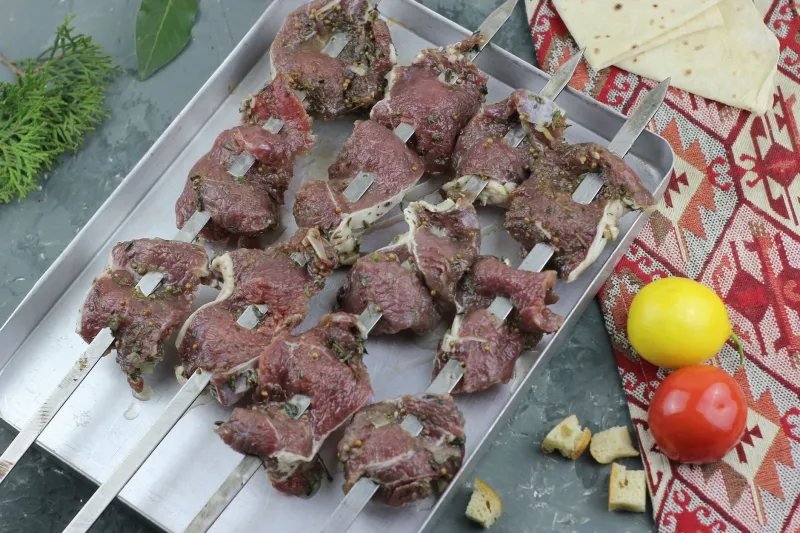
Yogurt is particularly effective because it's mildly acidic — gentle enough not to turn the meat mushy, but active enough to tenderize it over a long rest. This is why a lot of Turkish recipes call for overnight marinating, sometimes up to 36 hours. Rushing that process is one of the most common mistakes you'll see in places that are going through the motions without really understanding the technique.
Maillard reaction — the browning that happens when meat hits high heat — is also a key piece of the puzzle. Spices like paprika and turmeric, when they caramelize on the exterior of the meat, create those slightly charred, complex edges that give a kebab its signature crust. Getting that crust right requires the right heat, the right fat content, and yes, the right spice blend.
Why This Is Hard to Fake
Here's the honest truth: you can buy a jar labeled "Turkish seasoning" at pretty much any supermarket, and it won't get you there. Commercial spice blends are formulated for shelf life and mass appeal, which means the flavors are often flattened, the ratios are off, and ingredients like isot biber or proper sumac are either missing or substituted with something cheaper.
At Taki's Kebab House, we source our spices carefully. Some come directly from Turkish suppliers who specialize in these regional varieties. We're not going to pretend that's easy or cheap — it's not. But it's the only way to produce a kebab that actually tastes like what you'd find in a proper Turkish ocakbaşı (grill house).
Beyond sourcing, there's also the matter of experience. Knowing how long to marinate a specific cut, when to add salt (too early and it draws out moisture), how much fat to incorporate — these are judgment calls that come from cooking thousands of kebabs, not from following a recipe card.
Come Taste the Difference
We know that talking about spice science and regional traditions only goes so far. At some point, you just have to eat the thing.
Whether you're a longtime Turkish food fan or someone who's just getting curious about what's beyond the standard gyro, Taki's Kebab House is the real deal. Stop by, ask your server what's on the grill tonight, and taste for yourself what 24 hours of proper marinating actually does to a piece of meat.
Your taste buds will figure out the rest.