Where Everybody Knows Your Order: How the Kebab House Became America's Missing Living Room
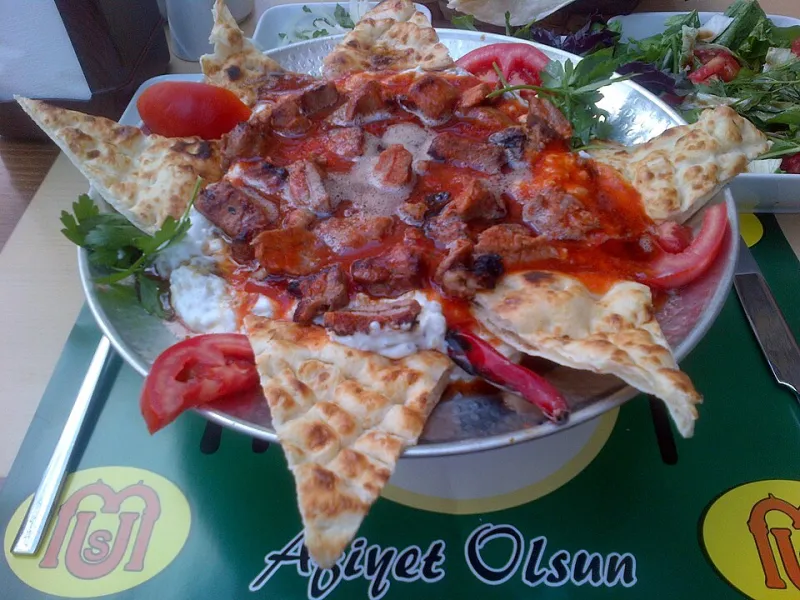
Photo: E4024, CC BY-SA 4.0, via Wikimedia Commons
There's a table near the window at Taki's Kebab House that, if you show up on a Thursday evening, you will almost certainly not be able to sit at. Not because it's reserved — there's no velvet rope situation happening here — but because Marcus, Diane, and their rotating cast of neighbors have been claiming it every week for going on three years. They didn't plan it that way. It just sort of happened, the way most good things do.
"I came in alone the first time," Marcus says, wrapping a piece of warm lavash around a chunk of Adana kebab like he's done it a thousand times. "Moved to the neighborhood, didn't know anyone. Taki's was close, the smell coming through the door was unreal, and I figured I'd grab a quick dinner." He pauses. "That was two and a half years ago. Now I've got a standing dinner reservation with people I actually like."
What Marcus stumbled into has a name, even if most people have never heard it. Sociologist Ray Oldenburg coined the term "third place" back in 1989 to describe the informal gathering spots that sit outside home (the first place) and work (the second place). Coffeehouses, barbershops, public parks — these are the kinds of spaces where community actually gets built, where neighbors become friends, where the texture of daily life gets a little richer. For a long time, Americans had plenty of them. Then, gradually, they didn't.
The Slow Disappearance of the Hangout
It's no secret that American social infrastructure has been hollowing out for decades. Bowling leagues folded. Corner bars got replaced by stadium-style sports bars with forty screens and nowhere comfortable to sit. Malls became ghost towns. The pandemic accelerated a trend that was already well underway, and by the time things reopened, a lot of people realized they'd lost the habit of just... being somewhere, regularly, with other people.
What filled the gap? For a surprising number of Americans, the answer has been Turkish restaurants.
This isn't entirely accidental. Turkish dining culture has always carried a strong communal DNA. Back in Istanbul or Gaziantep, the local kebabçı isn't just a place to eat — it's a neighborhood institution, a place where the same faces show up at the same times, where the staff knows your preferences before you sit down, where the meal is understood to be a social event first and a transaction second. When Turkish restaurateurs brought that culture to the US, they brought the whole package, not just the recipes.
"In Turkey, you don't rush someone out of a table," explains Selin, who has worked the front of house at Taki's for four years. "The idea that you finish your food and leave immediately — that's not how we think about it. You linger. You have tea. You talk. We try to bring that same feeling here."
The Regulars Who Built Something Real
Ask the staff at Taki's who the regulars are and they'll rattle off names, orders, and life updates without missing a beat. There's the retired schoolteacher who comes in every Tuesday for lentil soup and reads for two hours. There's the young couple who had their first date at the corner booth and now bring their toddler on Sunday afternoons. There's a loose confederation of coworkers from a nearby office building who started doing "kebab Fridays" as a morale experiment and never stopped.
Diane, part of Marcus's Thursday table crew, works in nonprofit fundraising and describes Taki's as the only place in her week where she's genuinely not thinking about her to-do list. "It's the combination of things," she says. "The food is comforting — like, actually comforting, not just good. The staff remembers us. There's no pressure to order fast or leave. It feels like someone's home, except someone else is cooking, which is obviously better."
That sense of ease is something Taki's has worked to cultivate deliberately. The space is warm without being precious about it — mismatched cushions, low lighting, the kind of background music that doesn't demand your attention. The menu is approachable enough for first-timers but deep enough to reward people who keep coming back and trying new things. And critically, the staff treats regulars like regulars, not just like repeat customers.
"When someone comes in enough times, we learn them," Selin says. "We know if they're having a rough week. We know if they want to talk or just want their food and some quiet. That relationship — it matters to us, not just to them."
Why This Matters More Than It Might Seem
The social science here is pretty compelling. Studies on loneliness in the US have been painting an increasingly grim picture for years — former Surgeon General Vivek Murthy called it an epidemic before he even got to the pandemic. One of the consistent findings is that casual, repeated, low-stakes social contact — what researchers call "weak tie" relationships — is disproportionately important for wellbeing. Not just close friendships, but the nod from the barista, the chat with the neighbor, the running joke with the server who knows your usual.
The neighborhood kebab house, it turns out, is a remarkably efficient generator of exactly this kind of connection. You don't have to commit to anything. You don't have to be "on." You just show up, eat good food, and let the place do its thing.
"I've introduced more people to each other at this restaurant than anywhere else in my life," Marcus says, and he's only half joking. "My friend from work, my neighbor, a guy I met at a street fair — they've all ended up at this table at some point. Taki's is kind of the connective tissue of my social life now."
Come for the Kebab, Stay for, Well, Everything Else
None of this is to say that the food is secondary — it absolutely isn't. The charcoal-grilled şiş kebab, the slow-built flavors of a proper Adana, the way the rice absorbs all the right things — these are the reasons people walk in the first time. But they're not necessarily the reason people keep coming back week after week, year after year.
What keeps Marcus and Diane and the Tuesday soup reader and the Friday office crew returning is something harder to put on a menu. It's the feeling of being known. Of having a place that's yours without having to own it. Of sitting down and immediately being a little more relaxed than you were when you walked in.
Oldenburg, if he updated his research today, might find his third place alive and well — just seasoned with sumac and served with a side of warm bread.
Taki's is open seven days a week. The table by the window is first come, first served. But give it a few Thursdays, and it might just become yours.