Your Regular Table: How the Kebab House Became America's New Favorite Hangout
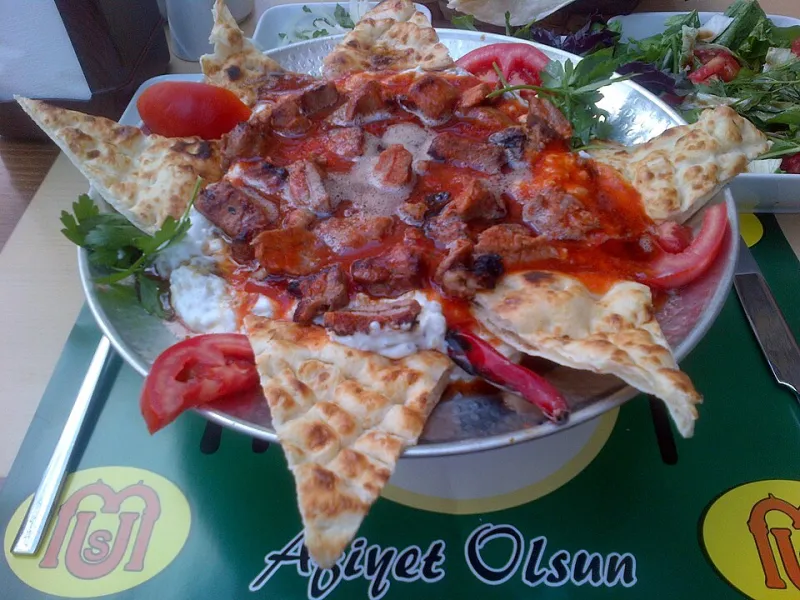
Photo: E4024, CC BY-SA 4.0, via Wikimedia Commons
There's a booth in the back corner of Taki's that certain people consider theirs. Not officially, of course. Nobody has a nameplate or a reservation on file. But if you show up on a Thursday evening, you'll find the same group of neighbors settled in, sharing a platter of mixed kebabs, arguing about nothing important, and laughing loud enough that the table next to them usually ends up joining the conversation. That booth doesn't belong to anyone — and somehow, it belongs to all of them.
This is what sociologists call a "third place." Not home, not work — somewhere else entirely. A spot with no agenda, no productivity requirement, no performance. Just people and food and time. For generations of Americans, that role was filled by diners, barbershops, bowling alleys, and neighborhood bars. But those spaces have been quietly disappearing, squeezed out by rising rents, shifting habits, and a culture that increasingly asks people to stay home and stare at a screen. What's stepped into that gap, at least in a growing number of neighborhoods? The Turkish kebab house.
Why This Particular Kind of Restaurant Works
It's worth asking why a kebab restaurant, specifically, tends to cultivate this kind of atmosphere. Part of it is structural. Turkish food is built for sharing — big platters, family-style portions, dishes meant to be passed across a table rather than guarded on a single plate. When you order a mixed grill at Taki's, you're not really ordering for yourself. You're inviting a conversation about which skewer to try first, whose lamb is better seasoned, whether the hummus needs more lemon. The food creates an opening.
Then there's the pace. Turkish dining culture doesn't rush you. A meal at a kebab house isn't designed to turn tables in forty-five minutes. You order, you wait a little, the food comes out in waves, and somewhere between the bread and the baklava, an hour and a half has passed and nobody noticed. That rhythm — unhurried, generous, a little chaotic in the best way — is genuinely rare in American restaurant culture, where efficiency has become the dominant value.
And then there's the staff. At places like Taki's, hospitality isn't a policy — it's a disposition. The Turkish concept of misafirperverlik, or guest-friendship, is deeply embedded in how people approach service. You're not a customer to be processed. You're a guest to be welcomed. Regulars notice this difference almost immediately, and it's a big reason they keep coming back.
The Regulars and What They're Actually Looking For
Spend a few evenings at any well-loved kebab house and you'll start to recognize the patterns. There's the solo diner who comes in twice a week and always orders the same thing, not because the menu is limited but because having a "usual" is its own small pleasure. There's the group of coworkers who discovered the place during a lunch run and now treat it as their unofficial off-site meeting room. There are families celebrating birthdays, couples on first dates, old friends catching up after too long apart.
What unites all of them isn't the food — though the food is genuinely great. It's the feeling that they're somewhere that knows how to hold people. In a cultural moment defined by isolation, algorithmic feeds, and the slow erosion of spontaneous human contact, that feeling is increasingly hard to find. And when people find it, they hold on.
American social infrastructure has been thinning for decades. Robert Putnam wrote about it in Bowling Alone back in 2000, and the trends he identified have only accelerated. People belong to fewer clubs, attend fewer communal events, and spend less time in shared public spaces than they did a generation ago. The pandemic made things sharper. Remote work removed one of the last reliable reasons to leave the house. Against that backdrop, a warm room full of good smells and genuinely friendly faces isn't just pleasant — it's almost radical.
What Happens When You Become a Regular
There's a particular kind of relationship that develops between a restaurant and its regulars that doesn't have a clean name in English. Turkish has esnaf, which roughly captures the bond between a neighborhood business and the community it serves, but even that doesn't quite cover it. It's the feeling that someone at the counter knows your name, remembers that you don't like it too spicy, and asks about your kid's soccer game without being prompted. It's small, but it accumulates.
At Taki's, that accumulation shows up in real ways. Regulars who've been coming in for years have watched staff members get married, celebrated the restaurant's anniversaries, and — more than a few times — shown up with flowers when someone behind the counter lost a family member. These aren't transactions. They're relationships, built one meal at a time over months and years.
Milestones tend to find their way here, too. Graduations, promotions, the end of a hard week, the start of something new — people mark these moments at the places that feel like theirs. A kebab house, with its warmth and its noise and its generous portions, turns out to be exactly right for that.
The Bigger Picture
What's happening at Turkish restaurants like Taki's is part of a broader cultural hunger for spaces that don't optimize you. Somewhere that doesn't need you to be productive, on-brand, or camera-ready. Somewhere that just lets you eat good food and be around people.
The Turkish kebab house, with its roots in a culture that has always treated the table as sacred ground, turns out to be surprisingly well-suited to that need. It didn't set out to become a community anchor. It just kept the door open, kept the food coming, and let people figure out for themselves that they wanted to stay.
If you haven't found your regular table yet, you might want to start looking. Ours has a booth in the back corner that's usually available — though no promises on Thursday evenings.