From Street Carts to Star Kitchens: How American Chefs Are Finally Catching Up to Turkish Kebab
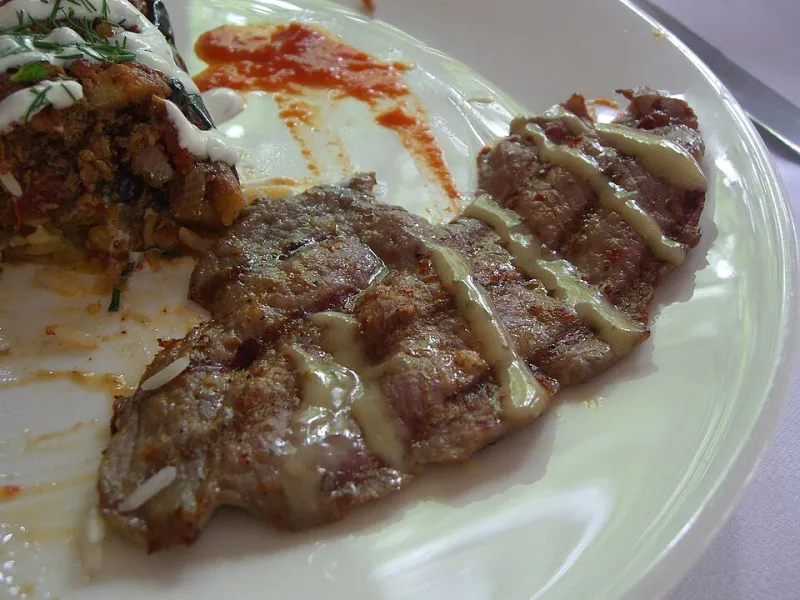
Photo: avlxyz, CC BY-SA 2.0, via Wikimedia Commons
The Secret Was Never Really a Secret
Walk into Taki's on any given weeknight and you'll find something that high-end restaurant kitchens across the country are now scrambling to replicate: a grill station producing perfectly charred, impossibly juicy kebab that tastes like it was marinated by someone's grandmother. Because, in spirit at least, it was.
Turkish kebab has been a staple of immigrant communities and neighborhood joints across the US for the better part of four decades. But somewhere along the way, fine dining decided it wasn't worth paying attention to. That's changing fast.
Over the past few years, a wave of American chefs — many of them trained in French and Italian traditions — have started incorporating Turkish kebab techniques into their menus. Smoke-kissed Adana, spit-roasted doner, and şiş skewers marinated in yogurt and spice blends are showing up in tasting menus and farm-to-table restaurants from Portland to Nashville. And the culinary world is treating it like a discovery. Neighborhood regulars at places like Taki's are treating it like a long-overdue acknowledgment.
Why It Took So Long
The honest answer is a little uncomfortable. Turkish food — like many cuisines from the Middle East and Eastern Mediterranean — spent years being lumped into a vague category of "ethnic food" that American food culture didn't always take seriously. Street food stigma played a role too. If something was affordable, quick, and served wrapped in flatbread, it somehow didn't qualify as sophisticated.
Chef Marcus Delray, who runs a contemporary American grill concept in Austin, puts it plainly: "We spent twenty years chasing French technique and Japanese precision. Meanwhile, Turkish cooks were doing something with fire and spice that nobody in a professional kitchen was really studying. That was a mistake on our part."
Culinary instructors are echoing that sentiment. At a number of American cooking schools, Turkish and broader Eastern Mediterranean techniques are finally making their way into core curriculum — not as exotic electives, but as foundational methods worth understanding alongside classical French and Italian traditions.
What Makes Turkish Kebab Technique Actually Different
Here's the thing that surprises a lot of people when they dig into it: Turkish kebab isn't just about what goes on the skewer. It's about a whole philosophy of cooking with fire, fat, and fermentation that produces results most Western grilling techniques simply don't achieve.
Take the yogurt marinade. It's one of the oldest tricks in the Turkish cook's playbook, and it works on a level that even professional chefs find hard to argue with. The lactic acid in yogurt breaks down muscle fibers in meat slowly and gently, resulting in a tenderness that acid-forward Western marinades — think lemon juice or vinegar — tend to overshoot. You get juiciness without mush. It's a subtle but profound difference.
Then there's the spice approach. Turkish kebab seasoning isn't about heat for heat's sake. It's about layering — cumin for earthiness, sumac for brightness, Aleppo pepper for slow warmth, fresh herbs for lift. Food critic and writer Dana Osei, who covers the restaurant scene in Chicago, describes it as "building a flavor architecture rather than just seasoning a piece of meat."
And the fire itself. Traditional Turkish grilling uses a specific relationship between coal heat, distance, and timing that's different from American barbecue or even standard restaurant grilling. The goal is a crust that seals quickly while the inside stays moist — achieved through precise heat management that looks effortless but takes real practice to master.
What Home Cooks Already Know
Here's the part that makes the restaurant world's "discovery" a little ironic: Turkish home cooks and community restaurants have been executing these techniques without fanfare for generations. The knowledge was never hidden. It just wasn't being looked for in the right places.
At Taki's, the marinades, the spice blends, and the fire management aren't innovations borrowed from a culinary trend. They're the baseline. They're what the regulars expect every single time they sit down. The techniques that fine dining chefs are now workshopping in test kitchens are the same ones that have been producing packed dining rooms at neighborhood kebab spots for years.
If you want to bring some of that home, the good news is that the barriers are lower than you'd think.
Bringing It Into Your Own Kitchen
You don't need a wood-fired grill or a culinary degree to start cooking Turkish kebab at home with real results. What you need is patience with marinades and a little attention to heat.
Start with the yogurt base. For chicken or lamb, try a marinade of full-fat plain yogurt, garlic, olive oil, cumin, Aleppo pepper (or a mild chili flake), and a pinch of cinnamon. Let it sit overnight if you can. The longer the better — twelve to twenty-four hours makes a noticeable difference.
Get your grill hot, then manage it. Turkish kebab benefits from high initial heat to develop that char, followed by a pull-back to let the inside finish cooking without burning the outside. If you're cooking indoors, a cast-iron grill pan gets you closer than a standard skillet.
Don't skip the resting step. Like any good grilled meat, kebab needs a few minutes off the heat before you cut into it. This is where the juices redistribute and the flavor settles.
Layer your garnishes. This is where a lot of home cooks leave flavor on the table. A squeeze of lemon, fresh parsley, a drizzle of good olive oil, and a dusting of sumac aren't just decorative — they're part of the dish's flavor profile.
The Bigger Picture
The fact that American chefs are finally taking Turkish kebab seriously is genuinely good news — not because the food needed their validation, but because it means more people get to experience it done right. As these techniques spread through professional kitchens and cooking classes, the audience for authentic Turkish food only grows.
For neighborhood spots like Taki's, that's a welcome shift. Every time a food critic raves about a fine dining kebab tasting menu, a few curious diners go looking for the real thing — and end up at a table that's been serving it right all along.
Maybe that's the best outcome of this whole renaissance: the chefs get a new technique to master, and the rest of us get a reminder that the neighborhood kebab house was ahead of the curve the whole time.